Part of the New England Hub • See also: Kancamagus Highway • Franconia Notch
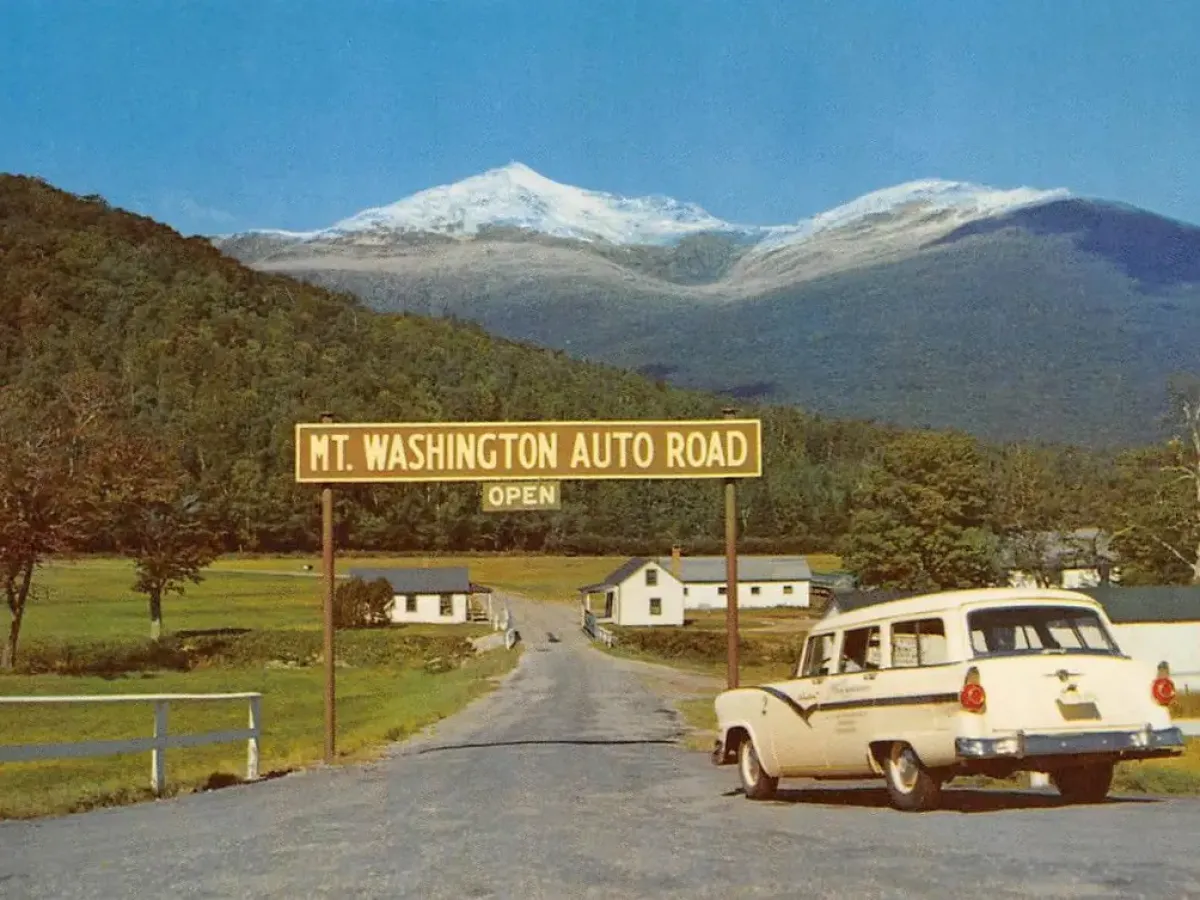
The Mt Washington Auto Road is an 8-mile toll road to the 6,288-foot summit of Mount Washington — highest peak in the Northeast. Known for extreme weather, steep grades, and no guardrails. This guide covers tolls, vehicle requirements, weather, summit buildings, and Cog Railway vs Auto Road.
Mt Washington Auto Road Tolls & Hours 2026
Operating from May through October, the Mt. Washington Auto Road allows you to drive your car to the summit, weather permitting.
The official rates for the 2026 season:- Mt Washington Tolls - Car & Driver: $45 Additional Adult: $15 Motorcycle & Driver: $45 Bicycle & Rider: $25 Children (Ages 4–12): $9 ages 5-12, Children (Under 5): Free
- Typically opens mid-May and closes late October (weather permitting).
- Daily First Car Up: 8:30 AM, Daily Last Car Up: 4:00 PM
- Summit Building Closures: Summit facilities and state park buildings close 30 to 45 minutes before the road itself closes./li>
- Return Timing: All vehicles must leave the summit within 45 minutes of the last allowed car up.
- Weather Conditions: Operating hours and access to the summit are always dependent on current weather. High winds or severe storms can force the road to close or mandate a "Winter Cut-off" where only partial ascents are allowed.
- Check your vehicle dimensions before going. Vehicles that are too large or certain modified trucks are prohibited due to the steep, 12% average grade and narrow switchbacks.
- For the most up-to-date road and weather conditions on the day of your planned trip, check the Mt. Washington Auto Road Status page or call ahead to the toll house.
Can My Car Drive Up Mt Washington? Vehicle Requirements
Driving your car up the Mt. Washington Auto Road is an incredible adventure, but it puts severe strain on your vehicle. Your car must be mechanically sound—particularly the braking and transmission systems—and must physically fit the road's strict safety guidelines.
🚫 Prohibited Vehicles
- Trailers & RVs: No trailers, RVs, motorhomes, mopeds, or scooters.
- Vehicles with poor brakes: If your brakes are weak or prone to fading, you are not permitted on the road.
- Low riders: Vehicles with exceptionally low ground clearance cannot handle the transition from the paved to unpaved sections of the road.
- Dual-wheeled vehicles: Dually trucks are not permitted.
⚙️ Transmission & Engine Requirements
- Low Gear Mandatory: Your vehicle must be able to lock into low gear (1st, L, or L1). This is critical for engine braking on the steep descent to prevent your brakes from completely failing.
- Honda & Acura Rule: Model year 2009 and older Honda/Acura vehicles with automatic transmissions must be able to demonstrate a "1", "L", or "S" (with 1st gear lock) on the shifter. 2010 and newer models are all allowed.
- Hybrids & EVs: Hybrids and electric vehicles are allowed. Regenerative braking is highly beneficial, but they still must meet the transmission/low-gear requirement where applicable.
🛑 Base Check & Brakes
- 1st Gear Verification: Staff will check if your transmission locks into 1st gear at the base before you are allowed to buy a toll pass.
- Brake Overheating: Descending is the most dangerous part of the drive. The road drops over 4,000 feet in 7.6 miles, and riding your brakes continuously will cause them to overheat and burn out.
- Cooling Stops: There are many designated turnouts and pull-offs to stop and let your brakes cool.
🚗 The Reward
The Bumper Sticker: After surviving the steep climbs, unpredictable weather, and narrow switchbacks, you can proudly purchase and display the iconic "This car climbed Mt. Washington" bumper sticker.Mt Washington Weather: “Worst Weather in America”
⚠️ Weather Extremes
- The Record: A world-record 231 mph wind gust was recorded here in 1934, holding the title for the highest recorded surface wind speed by a human-crewed station for decades.
- Rapid Swings: Temperatures can plummet or rise by 60°F within hours due to colliding weather systems.
- Snow in Summer: Snow can and does fall on the summit during every month of the year, including July and August.
🌡️ Average Temperatures
- Summer: Average summit temperature is around 27°F.
- Winter: Average summit temperature sits near -20°F, with wind chills occasionally dropping to -100°F or lower.
🎒 Essential Preparations
- Always Check Ahead: Never hike or drive up without reviewing the daily higher summits forecast.
- Dress for Winter: Even in July or August, pack full winter gear—including a windproof/waterproof shell, hat, gloves, and multiple warm layers.
Driving the Auto Road: 8 Miles, No Guardrails
Driving the Mount Washington Auto Road is a legendary, 7.6-mile mountain drive featuring a 12% average grade, narrow stretches without guardrails, and dramatic above-treeline gravel sections. Navigating the "Road to the Sky" requires a strict 20 mph speed limit, using your horn on blind corners, and frequent stops at pull-offs.
Road Specifications:- Total Length: 7.6 miles (one way)Surface.
- Breakdown: 5 miles of pavement, with the remaining 2.6 miles consisting of hard-packed gravel.
- Grade: 12% average grade, with extended sections reaching 18% to 22% near the summit.
- Elevation Gain: Climbs over 4,000 feet.
- Speed Limit: Strict 20 mph max limit.
- No Guardrails: The road remains open and exposed along steep drop-offs.
- Blind Corners: Always sound your vehicle's horn before approaching blind curves.
- Pull-Offs: Placed frequently along the route to let engines and brakes cool down.
- Essential Vehicle Requirements - Before attempting the drive, ensure your vehicle is approved.
- Low Gears Mandatory: Automatic vehicles must be able to lock into low gear (1, L, or L1) to prevent brake overheating during the descent.
- Prohibited Vehicles: RVs, motorhomes, trailers, and dual-wheeled vehicles are strictly not allowed.
- Weight: Vehicles carrying excessive weight (over 1,000 lbs of interior cargo) are generally not permitted.
- To check daily weather conditions, toll rates, and operating hours, visit the official Mt. Washington Auto Road site.
Summit Buildings: Observatory, Museum & Food
The summit of Mount Washington features a collection of buildings and historical sites anchored by the Sherman Adams Visitor Center. Visitors can experience alpine weather, grab food, and explore historical museums that capture the rich history and extreme conditions of the Northeast's highest peak.
Sherman Adams Summit Building
Mt Washington Auto Road vs Cog Railway: Which is Better?
| Feature | Mt Washington Auto Road | Cog Railway |
|---|---|---|
| Cost 2026 | $45 car + driver, $15 per adult | $84 adult, $45 child |
| Time | 30 min up, stop anywhere, 2-3 hours total | 3 hours round-trip, 1 hour at summit |
| Control | Your schedule, pull-offs, photos | Set departure, no stops, narrated |
| Fear Factor | No guardrails, 1000 ft drops, 12% grade | Steep but on rails, historic |
| Kids/Dogs | Dogs allowed, car sick risk | No dogs, better for nervous drivers |
1-Day Mt Washington Itinerary from North Conway
This 1-day itinerary from North Conway brings you to the summit of Mount Washington via the historic Auto Road, followed by a relaxing afternoon exploring waterfalls or scenic mountain views.
Morning:- The Ascent 8:15 AM | Depart North Conway: Drive 15-20 miles north on NH-16 to the Mount Washington Auto Road base in Gorham (about a 30-minute drive).
- 9:00 AM | Auto Road Drive: Start your 7.6-mile drive up the mountain. It takes approximately 30 minutes, offering stunning, panoramic views of the White Mountains as you cross into different climate zones.
- Toll fees (2026 peak season): $45 for car and driver; $45 for each additional adult; $15 for children ages 4-12.
- Summit Exploration 9:30 AM - 11:30 AM | At the Top: Spend two hours enjoying the "top of the rock".
- Visit the Mount Washington Observatory Museum and Extreme Weather Exhibit for interactive displays about the Northeast's highest peak.
- Warm up and grab a bite to eat at the Summit Cafe (tip: enjoy a hot drink and look out over the Presidential Range).
- Take pictures by the iconic summit sign and check out the historic Tip-Top House.
- Head back down the mountain (allow 30-45 minutes) and choose one of the following options just minutes south on NH-16 in Pinkham Notch:
- Option 1: Glen Ellis Falls (Nature & Waterfalls)
- Details: A short, steep hike leads to a spectacular 64-foot plunge waterfall on the Ellis River.
- Time Required: 1 - 1.5 hours.
- Cost: $5 per-vehicle parking fee (bring cash).
- Option 2: Wildcat Mountain (Scenic Views & Adventure)
- Details: Take the Wildcat Express Scenic Lift Ride to the summit for breathtaking, unobstructed views of Mount Washington.
- Time Required: 1.5 - 2 hours
- Cost/Hours: Scenic lift tickets vary by package (check Wildcat Mountain Resort for pricing), and the lifts generally operate until 4:00 PM.
Mt Washington Auto Road Safety: Crashes & Deaths
Navigating the Mt. Washington Auto Road requires strict adherence to safety rules due to its average 12% grade, lack of guardrails, and sudden weather shifts. To survive the 7.6-mile descent, drivers must use their vehicle's lowest gear to prevent catastrophic brake failure.
Key Safety Hazards & Rules- Steep Grades & Brake Failure: The descent is incredibly steep. Relying entirely on foot brakes will cause them to overheat and burn out. Drivers are explicitly instructed to descend in the lowest gear (1st or Low) to use engine compression for braking. Multiple pull-offs are provided along the route to stop and cool down your brakes if they get too hot.
- Extreme Exposure: The road features no guardrails and contains terrifying drop-offs that exceed 1,000 feet, particularly on the upper stretches above the tree line.
- Unpredictable Weather: Conditions change in minutes. The summit is notorious for hurricane-force winds, thick fog, and sub-freezing temperatures, even during the summer months.
- Casualties & Statistics While the Auto Road itself has a remarkably low fatality rate (only 3 deaths in over 150 years of operation), the broader peak of Mount Washington is famously deadly.
- Over 150 Deaths: Since 1849, the mountain has claimed more than 150 lives.
- Exposure & Hypothermia: The vast majority of these fatalities are hikers who succumbed to sudden weather changes, extreme wind, and severe hypothermia.
More Exciting Adventures!
Franconia Notch State Park — Flume Gorge and Cannon Mountain Tram are 10 minutes west on I-93. Tram reopened 2026 with new 80-passenger car.
Kancamagus Highway — they’re 15 minutes apart via Lincoln. Do Flume Gorge morning, drive Kanc afternoon.
NH, Maine, VT Mountain Passes & Scenic Gaps Guide - New England Mountain Passes